AI Discoverability: How Small Businesses Get Cited by AI
A plain guide to AI discoverability for business owners: how AI assistants pick sources, whether their crawlers can reach your site, and what to fix first.
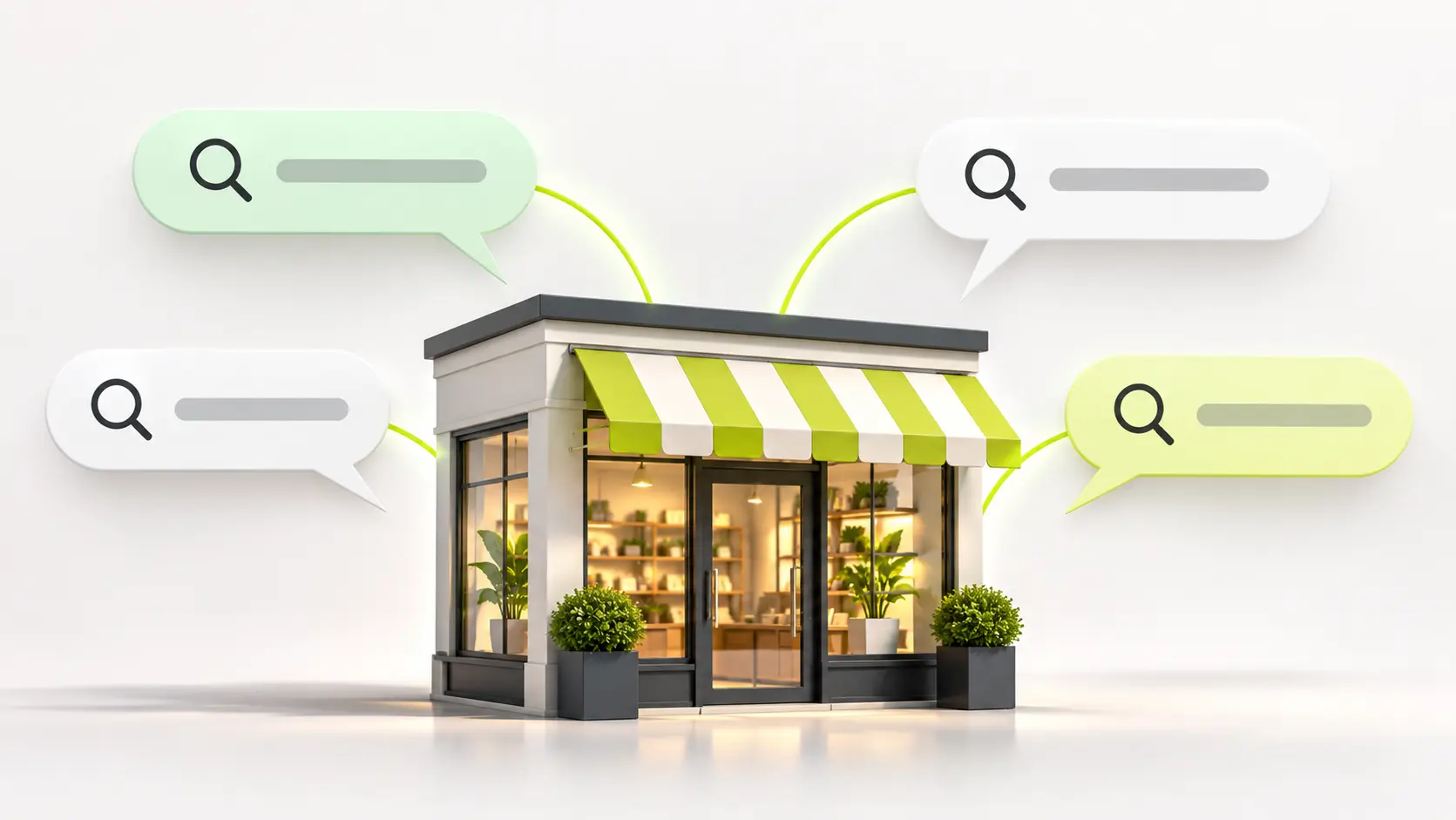
AI discoverability is whether an AI assistant can find your website, read it, and cite it when someone asks a question your business answers. It is not a new discipline. It is a short list of checks on top of the SEO work you should already be doing. This post walks through those checks in the order we run them.
What is AI discoverability?
AI discoverability is the ability of assistants like ChatGPT, Gemini, Claude and Perplexity to find, read and cite your site when a user asks a question your pages answer. If a customer types "who repairs commercial HVAC in Queens on weekends?" into ChatGPT, discoverability decides whether your page is in the pool the assistant pulls from, and whether it gets named.
Three things have to be true. The crawler has to be allowed in. The page has to load fast, in plain HTML, so the crawler can read it. And the page has to answer the question in words close to how it was asked. Miss any one and you are invisible to that assistant.
Most owners assume the problem is content. In practice, the first two are more common, and cheaper to fix.
How do AI assistants choose which sites to cite?
They mostly pull from search results, then pick the pages whose titles and content match the question most closely. Being findable in search comes first. Being the clearest answer comes second.
Ahrefs looked at this in a study of 1.4 million ChatGPT prompts, published in April 2026. The headline finding: 88% of the URLs ChatGPT ends up citing come directly from search. The assistant runs its own searches (Ahrefs calls them fan-out queries), collects results, and cites the ones that fit. Cited pages had titles closer in meaning to the user's prompt than non-cited pages, and pages with natural-language URL slugs were cited at a higher rate (89.78%) than pages without (81.11%). The authors' summary: to be cited, you need to be in that search selection pool, and your title and URL need to match what the AI is asking.
Brand presence elsewhere matters too. In a separate Ahrefs study of 75,000 brands from December 2025, YouTube mentions showed the strongest correlation with AI visibility (about 0.737), branded web mentions came next (0.66 to 0.71), and link metrics like backlinks showed very weak correlations. Ahrefs says correlation is not causation, and so do we. But the direction is clear: being talked about by name, on other sites and on YouTube, lines up with being named by AI.
Can AI crawlers even reach your site?
Often, no. Three things block them: a robots.txt rule somebody added in 2023, pages that only render with JavaScript, and pages too slow or heavy to crawl.
Start with robots.txt. Each assistant has its own crawler name. OpenAI runs several bots: OAI-SearchBot surfaces sites in ChatGPT search, GPTBot collects content for model training, and ChatGPT-User fetches a page when a user asks for it. OpenAI's documentation says sites that opt out of OAI-SearchBot will not be shown in ChatGPT search answers, and that each setting is independent, so you can block GPTBot while allowing OAI-SearchBot. Anthropic uses ClaudeBot, Perplexity uses PerplexityBot, and Google-Extended controls Gemini's use of your content separately from normal Google Search. Many sites blocked all of these in one sweep to keep content out of training sets. That decision now keeps you out of the answers too.
Next, rendering. Most AI crawlers do not run JavaScript. If your site paints its content with a script after load, the crawler sees an empty shell. Server-rendered HTML is the fix.
Then speed and weight. A page that takes six seconds and 8 MB to load is one a crawler may skip. The fixes that improve Core Web Vitals fix this too.
You can check all three in one place. Ahrefs added an "AI Discoverability" issue category to Site Audit in its September 2026 update. The checks flag pages blocked from AI bots in robots.txt, pages too slow or heavy for AI crawlers, inconsistent AI bot policies, and pages requiring JavaScript rendering. Ahrefs walks through the new checks in a three-minute September 2026 product update video. No Ahrefs seat? Ask your developer to read robots.txt and view the page source with JavaScript off.
What should you change on the site?
Write one clear page per question, put the answer in the first paragraph under a question-shaped heading, and keep the basic facts current. That is most of it.
In practice:
- Question headings, direct answers. Phrase H2s the way a customer would ask. Answer in the first one to three sentences, then add detail. This mirrors how the assistant matches titles to its fan-out queries.
- One page per question. A single "Services" page covering eight things loses to eight competitors who each wrote one page per thing. Split it.
- An FAQ section with real questions. Pull them from your inbox and phone log, not a keyword tool.
- Up-to-date facts. Address, hours, service area, whether you take insurance or do weekends. An assistant that reads a stale "closed Sundays" line will repeat it to a customer.
- Schema markup that matches the visible text. LocalBusiness, FAQPage and Service schema help machines read the page. Google's guidance on AI features and your website says there is no special structured data to add for AI Overviews or AI Mode, but your structured data should match what is on the page.
- Readable URLs. /blog/commercial-hvac-repair-queens beats /p?id=4471.
How do you measure AI discoverability?
Watch referral traffic from the assistants in GA4, and accept that Google does not break out AI Overview clicks for you.
In GA4, open Reports, Acquisition, Traffic acquisition, then switch the dimension to Session source. Look for chatgpt.com, perplexity.ai, gemini.google.com and claude.ai. The numbers will be small at first. What you want is the trend over a quarter and whether those sessions turn into form fills or calls. Set up key events first, or the referral number means nothing. Our post on how to measure SEO ROI walks through tying sessions to leads.
Google Search Console helps with impressions, not clicks. Its Generative AI performance report shows how often links to your site appeared in AI Overviews and AI Mode, by page, country, date and device, but it reports impressions only, and the same data sits inside the normal Web search type of the Performance report rather than on a separate clicks line. So when clicks dip but impressions hold, part of the answer may be an AI Overview answering without a click. If you are new to the tool, start with our Search Console guide for business owners. Our free reporting tool pulls those Search Console numbers nightly alongside the GA4 key events you choose, which makes the quarter-over-quarter comparison easy to see.
Finally, test by hand once a month. Ask each assistant the five questions your customers ask most and note who gets cited. Crude, but it is the only direct view you have.
Is AI discoverability different from SEO?
Not really. It builds on SEO. Google's own guidance says there are no additional requirements to appear in AI Overviews or AI Mode and no special optimizations necessary, and Ahrefs' data shows ChatGPT draws most citations from search results. If your site cannot rank, it will not be cited. What AI discoverability adds is a short technical checklist (crawler access, rendering, speed) and a stronger preference for pages that answer one question directly. Treat it as a lens on your existing SEO work, not a second program.
Quick answers
How do I get my business cited by ChatGPT?
Allow OAI-SearchBot in your robots.txt, make sure your pages render as plain HTML without JavaScript, and write one page per customer question with the answer in the first paragraph. ChatGPT draws most citations from search results, so a page that already ranks for the question is the best candidate. Then get your business name mentioned on other sites and on YouTube, since brand mentions correlate with AI visibility.
Does blocking AI crawlers hurt?
It can. Blocking GPTBot keeps your content out of OpenAI's training data and has no effect on ChatGPT search. Blocking OAI-SearchBot removes you from ChatGPT search answers, according to OpenAI's documentation. Many sites added a blanket block on every AI user agent a few years ago. Check which bots your robots.txt blocks today and decide bot by bot. The settings are independent.
Do I need a special "AEO agency"?
No. The work is technical SEO (crawler access, rendering, speed) plus content that answers questions directly. A competent SEO partner who also understands your codebase can do all of it. Be wary of anyone selling "AI optimization" as a separate retainer with its own jargon. Ask what they would change in the first month. If the answer is the list in this post, your existing team can do it.
How long does it take to show up in AI answers?
Crawler fixes are quick: OpenAI says its systems adjust about 24 hours after a robots.txt change. Content takes longer, because the assistant mostly cites pages that already rank in search, and ranking a new page usually takes months. Brand mentions build slowly. Plan on a quarter before you expect referral traffic from assistants in GA4, and judge the trend, not any single week.
What is the cheapest first step?
Read your own robots.txt. Open yourdomain.com/robots.txt in a browser and look for lines naming GPTBot, OAI-SearchBot, ClaudeBot, PerplexityBot or Google-Extended. If a Disallow rule covers a search bot you want to appear in, remove it. This costs nothing, takes ten minutes, and is the most common reason a small business is invisible to AI assistants.
Next step
If you want to know whether AI assistants can reach and read your site, book a free call. We review robots.txt, rendering, speed and your top pages, and you leave with a written recommendation, whether or not we work together. Our developers and SEO people are one team, so the technical and content fixes come from one plan.