Website Redesign RFP Template (2026): What to Include
A redesign RFP has to protect traffic, rankings and URLs you already have. Here is what to include, what to ask vendors to show, and a template you can copy.
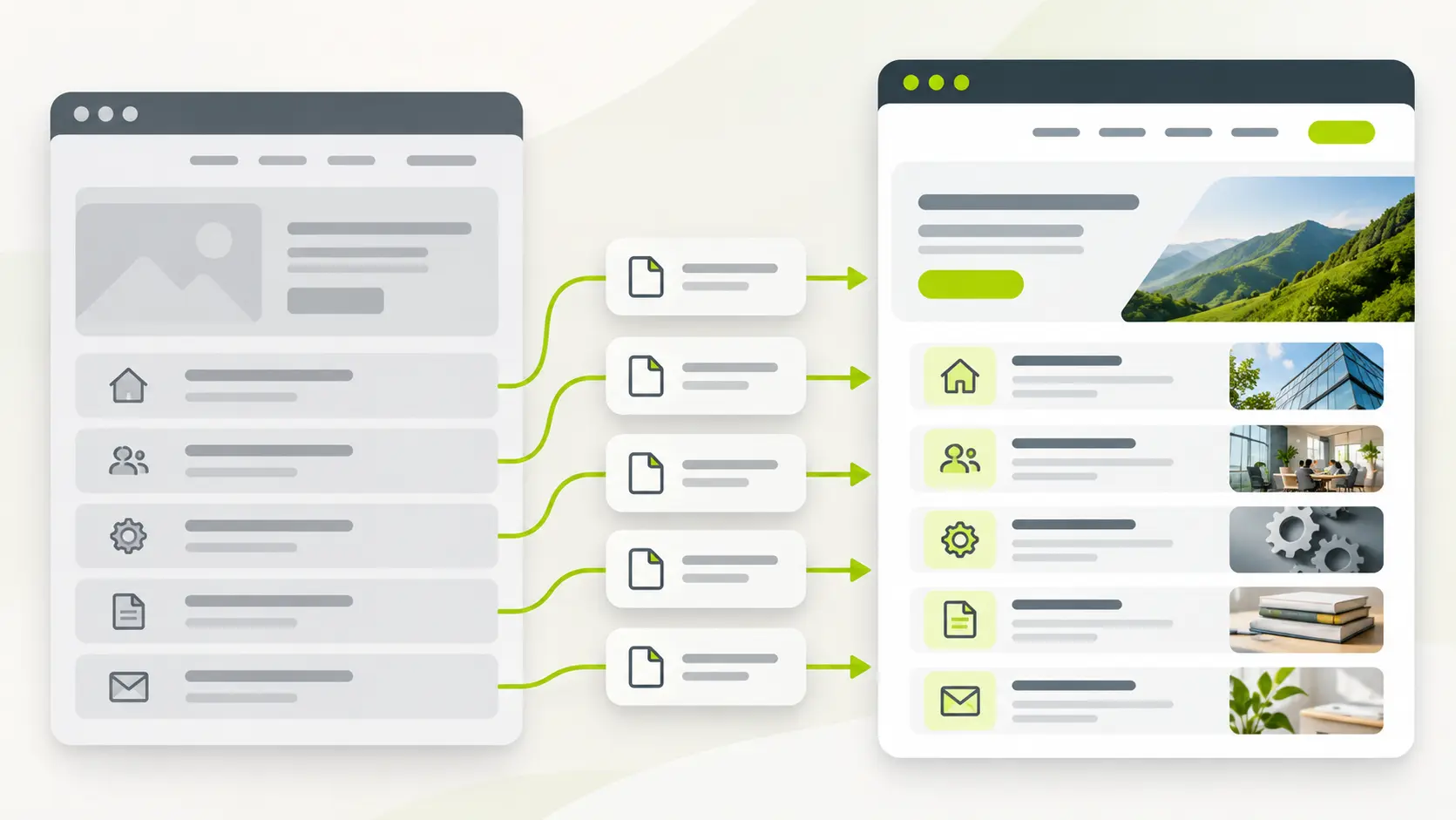
A website redesign RFP has one job a new-site RFP does not: protect what your current site already earns. You have pages that rank, URLs other sites link to, forms that feed your CRM, and content someone spent years writing. An RFP that only describes the new design invites vendors to treat all of that as an afterthought.
Why is a website redesign RFP different from a new-site RFP?
A redesign RFP is different because there is something to lose. A new site starts at zero. A redesign starts with traffic, rankings and integrations, and a careless launch can erase them in a week.
A general website RFP focuses on goals, audience, features and look. Our website design and development RFP template covers that ground, and most of it still applies here. A redesign RFP adds a second layer: an inventory of the current site, rules for carrying its value across, and proof the vendor has done it before without a traffic drop.
Vendors price what you describe. If the RFP is silent on redirects and migration, the cheapest proposal will be the one that skipped them.
What should the RFP say about your current site?
Give vendors enough about the current site to scope the migration without guessing. A short "current state" section saves a dozen clarifying emails and produces proposals you can compare.
Include these points:
- Platform and hosting. The CMS (WordPress, Webflow, Shopify, custom), where it is hosted, and who manages it today.
- Size. Roughly how many pages, posts and products exist, and how many you intend to keep.
- Traffic and top pages. Monthly organic sessions and the pages that bring most of them. Search Console's Performance report lists the top pages to protect; our free reporting tool shows the same pages alongside your GA4 key events, so vendors get one view of what matters.
- Integrations. Every system the site talks to: CRM, email platform, booking or payment tools, analytics tags, chat widgets. Name each and what the connection does.
- Known problems. Slow pages, broken mobile layouts, a form that drops leads, or content the team cannot edit without a developer. This is often the real reason for the redesign, so say it plainly.
- Assets you own. Brand guidelines, photography, copy, and whether the current code can be reused.
A page-level export can wait until a vendor is shortlisted. Hiding the basic numbers only produces vague proposals.
What must the RFP say about URLs, redirects and content migration?
The RFP must require a full URL map, permanent server-side redirects for every URL that changes, and a defined plan for moving content, metadata and media. These are where redesigns lose rankings, so they belong in the scope, not in a vendor's good intentions.
Google's guidance on moving a site with URL changes says to map your old URLs to the new ones, use server-side permanent redirects where technically possible, and keep them for as long as possible, generally at least a year. Its redirects documentation adds that server-side redirects have the highest chance of being interpreted correctly, and that permanent redirects are right when you are sure the change will not be reverted. Put those requirements in the RFP word for word. A vendor who pushes back on them is telling you something.
For the full list of what to check before, during and after launch, use our website redesign SEO checklist. The RFP does not need to repeat it, only to say the vendor is responsible for it and that launch sign-off depends on it.
The migration section should ask vendors to confirm:
- Who builds the URL map, and whether it covers indexed images and PDFs.
- How titles, meta descriptions, headings and structured data move with each page.
- How the staging site is kept out of Google's index.
- What gets checked in Search Console after launch, and who does it.
How do you describe scope, budget range, timeline and evaluation criteria?
Describe scope as a list of deliverables, state a budget range rather than a single figure, give a realistic timeline with your preferred launch window, and publish how you will score proposals.
Scope. Split it into design, build, migration, integrations, content and post-launch support. Say which parts are in, out, or quoted as options. If you want the vendor to write copy, say so.
Budget range. A range tells vendors which tier of solution to propose without anchoring them to your ceiling. A redesign with a migration costs more than the same design on a blank slate.
Timeline. Give the response deadline, a Q&A window, the decision date, and the launch window. Google's site move guidance suggests timing the move for a lower-traffic period, so avoid your busiest season, and plan a monitoring period after launch.
Evaluation criteria. List the criteria and their weights: redesign experience, migration plan quality, design approach, technical fit with your integrations, price, and post-launch support. Weighting migration at least as heavily as design keeps the decision honest. Our guide on how to evaluate web development proposals walks through scoring.
What should you ask vendors to show?
Ask for redesign case studies with before-and-after search data, a written migration plan for your site, and the names of the people who will do the work. Portfolio screenshots prove a vendor can design, not that they can relaunch a site without losing traffic.
Ask specifically for:
- Two or three redesign case studies where the vendor moved a site with existing traffic. Ask for organic clicks in the three months before and after launch, and what happened to the top pages. A vendor who tracks this will have it.
- A migration plan outline for your site, based on the current-state section. One page is enough. You are checking whether they read the RFP and have a method.
- The redirect approach. How the URL map is built and tested, and how long redirects stay in place.
- Who does the SEO part. The team that builds the site, or a subcontractor who shows up after launch? Redesigns go wrong in that gap. At Premier Logic the developers and the SEO people are one team, which is why we ask.
- References you can call, ideally from a redesign that launched a year or more ago, so you can ask whether rankings held.
Ahrefs' website migration guide notes that a drop after a move is usually related to redirects, something that cannot be crawled, or something marked noindex. All three are vendor-controlled.
What goes in a website redesign RFP template you can copy?
Paste this structure into a document and fill it in. Four to six pages is plenty.
- Company overview. Who you are, who your customers are, and why you are redesigning now.
- Current site summary. CMS, hosting, page count, monthly organic traffic, top pages, integrations, and known problems.
- Goals and success metrics. What the new site must do better, with numbers where you have them (leads per month, conversion rate, page speed).
- Scope of work. Design, build, content, migration, integrations and post-launch support, each marked in, out or optional.
- URL, redirect and content migration requirements. Full URL map, permanent redirects kept at least a year, metadata carried over, staging kept out of the index, post-launch monitoring.
- Technical and compliance requirements. Platform preference, performance targets, accessibility standard, security, analytics setup.
- Budget range and timeline. The range you will consider, key dates, and the preferred launch window.
- Vendor questions. Case studies with before-and-after search data, migration plan outline, team, references.
- Evaluation criteria and weights. How proposals will be scored and by whom.
- Submission instructions. Format, deadline, Q&A process and a single point of contact.
Quick answers
How long should agencies get to respond to a website redesign RFP?
Give vendors two to three weeks from the day you send it, plus a Q&A window in the first week. A redesign RFP asks for a migration plan and case studies with data, and good vendors need time to pull those together. A one-week deadline filters for agencies that send templated proposals.
Should you share the current site's analytics in the RFP?
Share the summary numbers: monthly organic traffic, top ten pages, and the key events you care about. That is enough for vendors to scope the migration and show they understand what to protect. Hold full Search Console and GA4 access until you shortlist, then grant read-only access so finalists can refine their plan.
What budget range should you state in a redesign RFP?
State a range you would actually approve: the low end is what you would pay for a competent job, the high end what you would pay for the ideal one. A range keeps proposals in the right tier without anchoring every vendor to your ceiling. The migration adds real work on top of the design, so set the range with that included.
Do you need an RFP for a redesign on the same platform?
Not always. If you are keeping the CMS and the URLs, and the change is mostly visual, a short brief and two or three proposals are usually enough. You still want a written commitment to protect existing pages. If URLs, templates or integrations change, treat it as a full redesign and use the RFP.
How is a website redesign RFP different from a website RFP?
A website RFP describes what you want built. A redesign RFP also describes what you already have and how it must be protected: the current site inventory, the URL map and redirects, content migration, and proof the vendor has relaunched sites without losing traffic. For the general version, see our website design and development RFP template.
Next step
If you want a second opinion on your redesign RFP before you send it, book a free call. We will read your current site's numbers with you and tell you what the RFP needs to protect. You leave with a written recommendation, whether or not we work together.