Nearshore vs Offshore Software Development: A Guide for US Buyers
Nearshore means Latin America and shared working hours. Offshore means India, Eastern Europe or Southeast Asia and lower rates. Here is how a US business picks.
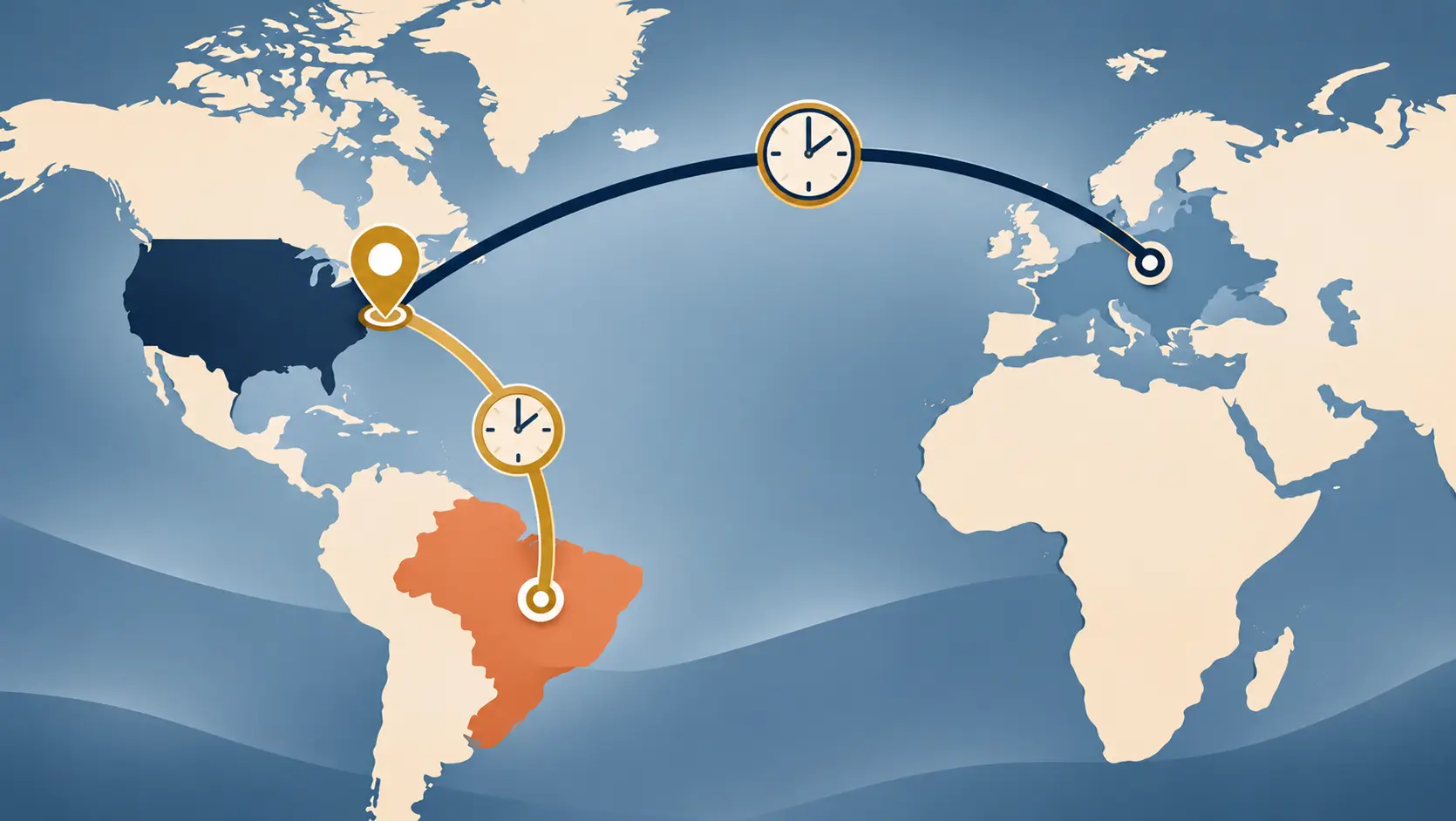
Nearshore and offshore are both ways of hiring developers outside the US, and the difference that matters is time zone, not distance. Nearshore means a team in Latin America that works most of your day with you. Offshore means a team in India, Eastern Europe or Southeast Asia that works while you sleep. One costs a bit more and answers you in minutes. The other costs less and answers you tomorrow. This guide covers both for a US buyer: current rates, the trade-offs people underrate, and a simple way to decide.
What is the difference between nearshore and offshore development?
Nearshore development means working with a team in a nearby country that shares most of your working hours. For a US company that usually means Mexico, Colombia, Costa Rica, Argentina or Brazil. Offshore development means working with a team in a distant country where the overlap is small: India, Pakistan, the Philippines, Vietnam, Ukraine or Poland.
The dividing line is overlap, not geography. Mexico City is on Central Time. São Paulo runs one or two hours ahead of New York. A team in those cities can join your 10 a.m. standup. A team in Bangalore is about ten hours ahead of New York, so your morning is their evening. Eastern Europe sits in between: Warsaw is six hours ahead, which gives you a few shared hours before lunch and nothing after.
Both models come in the same shapes: an agency that runs the project, a staffing firm that places developers on your team, or freelancers hired directly. The label only tells you where the people sit and when they work.
How much do nearshore and offshore developers cost?
Nearshore developers in Latin America typically cost $40 to $100 an hour at agency rates in 2026, while offshore developers in India and Southeast Asia cost $25 to $75. Both are well under US rates of $150 to $300 an hour, and the gap between nearshore and offshore is smaller than most buyers expect.
Those bands come from a FullStack comparison updated in October 2026, which also notes that agency rates run roughly one and a half to two and a half times what an individual contractor in the same country charges. Revelo's July 2026 guide puts nearshore at $40 to $70 an hour and offshore Asia at $20 to $50, with specialists in AI or cloud architecture reaching $80 to $90 nearshore. A Bluecoding post from January 2026 lands in the same place: $50 to $90 nearshore, $25 to $50 offshore.
Two cautions. All three sources sell nearshore services, so treat the figures as a market picture, not a quote. And the hourly rate is the easy number. The real cost includes your management hours, rework when a spec was misread overnight, and the weeks lost when a developer leaves. For the full comparison against US rates, read offshore vs US-based developer cost.
What are the real trade-offs beyond the hourly rate?
The trade-offs that decide whether an outsourced project goes well are overlap hours, time-to-answer, communication, legal protection, payment friction and turnover. The rate difference is often smaller than the cost of getting these wrong.
- Overlap hours. A Latin American team gives you six to eight shared hours a day. An Indian or Vietnamese team gives you one or two, and only if someone stays late. Overlap is what lets you unblock a developer in five minutes instead of tomorrow.
- Time-to-answer. With a twelve-hour gap, a question asked at 10 a.m. is read at your 10 p.m. and the follow-up waits another day. Bluecoding's example stretches one bug question into a 36-hour loop. That is normal offshore, and it is why complete written specs matter more there.
- Communication. English levels are high in both regions. The subtler issue is directness. Some offshore teams hesitate to say "this will be late" until it is late. Nearshore teams tend to share US business habits, so bad news arrives sooner.
- Legal and IP. Your contract should assign all code and IP to you, name a US state as governing law, and require the vendor's staff to sign the same terms. A US patent or trademark does not protect you abroad by itself, so the contract and your control of the repository are the practical protection.
- Payment. Most vendors in both regions invoice in US dollars by wire or a platform. Some ask for large deposits. Pay against milestones you can verify.
- Turnover. Revelo cites attrition under 15 percent in Latin America and over 40 percent a year in some offshore regions, though its figures vary by section, so ask any vendor for their real number. Every departure costs you weeks of ramp-up.
When does nearshore fit, and when does offshore fit?
Nearshore fits when the work changes often, needs daily conversation, or sits close to your customers. Offshore fits when the work is well defined, runs in long stable batches, or when the budget simply does not stretch to nearshore rates.
| Your situation | Better fit | Why |
|---|---|---|
| New product, requirements still moving | Nearshore | Daily live conversation prevents rework |
| Clear spec, stable scope, long build | Offshore | Async handoffs work when nothing changes overnight |
| Owner is the only decision maker, limited time | Nearshore | You cannot answer questions at midnight |
| Maintenance, QA, data work, infra updates | Offshore | Follow-the-sun handoffs suit routine tasks |
| Tight budget, patient timeline | Offshore | Lowest hourly rate, if you accept slower loops |
| Compliance-heavy data (health, finance) | Nearshore or US | Easier legal reach and enforcement |
| You already have a strong US-side tech lead | Either | A good lead can absorb the time gap |
Many businesses end up with a mix: a nearshore lead who is awake with you and an offshore pair for routine work. The mix works only when one person on your side owns the whole thing.
How do you manage a nearshore or offshore team?
You manage either model the same way: a fixed daily overlap window, written specs for every piece of work, and one named owner on the US side who makes decisions. Skip any of the three and the hourly savings leak out as rework.
Set the overlap window first. For nearshore that is most of the day, so pick a standing standup time and keep it. For offshore it may be 8 to 10 a.m. Eastern, and every question that needs a human answer gets batched into that window. Developers should never sit blocked waiting for you.
Write the spec before the work starts. A ticket that says "add filters to the orders page" will come back wrong from any time zone. A ticket that lists the fields, the default state, the empty state and the acceptance test comes back right. If you are starting a full engagement, our software statement of work template covers what to put in writing before anyone bills an hour.
Name a US-side owner. This person reviews work every day, answers questions inside the window, and holds the repository, the cloud accounts and the app store accounts in your company's name. If nobody on your team can do that, it is a sign to hire a fractional lead or a US partner who runs the outsourced team for you. The math on that choice is in fractional dev team vs in-house cost.
That setup is how we often work at Premier Logic: a New York team that owns the architecture and the daily reviews, with the build spread wherever it makes sense. Our free call ends with a written recommendation on which model fits, even when the answer is "offshore is fine, just write the spec first."
Quick answers
What is the difference between nearshore and offshore?
Nearshore means outsourcing to a nearby country that shares most of your working hours. For a US company that is Latin America, with a zero to three hour time difference. Offshore means a distant country such as India, Vietnam or Poland, with a six to twelve hour gap. Nearshore costs more per hour and gives you live collaboration. Offshore costs less and runs mostly asynchronously.
Is nearshore more expensive than offshore?
Yes, by hourly rate. In 2026 nearshore Latin American agencies typically charge $40 to $100 an hour, while offshore teams in India and Southeast Asia charge $25 to $75. The gap narrows once you count management time, rework from overnight misunderstandings and turnover. Several vendors argue nearshore ends up cheaper on total cost for projects that change often, though those vendors sell nearshore.
Which countries count as nearshore for the US?
For a US buyer, nearshore usually means Mexico, Colombia, Costa Rica, Argentina, Brazil, Chile, Peru and Uruguay. Mexico City is on Central Time and São Paulo is one or two hours ahead of New York, so the full working day overlaps. Canada is technically nearshore too, but its rates are close to US rates, so it is rarely chosen for cost.
Is offshore development safe for IP?
It can be, if the contract does the work. Your agreement should assign all code and IP to you, name a US state as governing law, require the vendor's staff to sign the same terms, and give your company ownership of the repository, hosting and app store accounts from day one. US patents and trademarks do not apply abroad automatically, so control of the accounts is your real protection.
Can a small business manage an offshore team?
Yes, with three habits: a daily overlap window where questions get answered, written specs with acceptance criteria for every ticket, and one person on your side who reviews work every day and makes decisions. If nobody on your team has the time or technical judgment for that role, hire a fractional lead or a local partner to run the team for you.
Next step
If you are weighing a nearshore or offshore team and want a second opinion before you sign, book a free call. We will look at your spec, your budget and who on your side will own the work, and you leave with a written recommendation, whether or not we work together.