Local SEO for Service Businesses: What Ranks in the Map Pack in 2026
A practical local SEO guide for plumbers, contractors, clinics, home care and law firms, with a New York lens. Google Business Profile, reviews, NAP, service-area pages and what "near me" actually ranks.
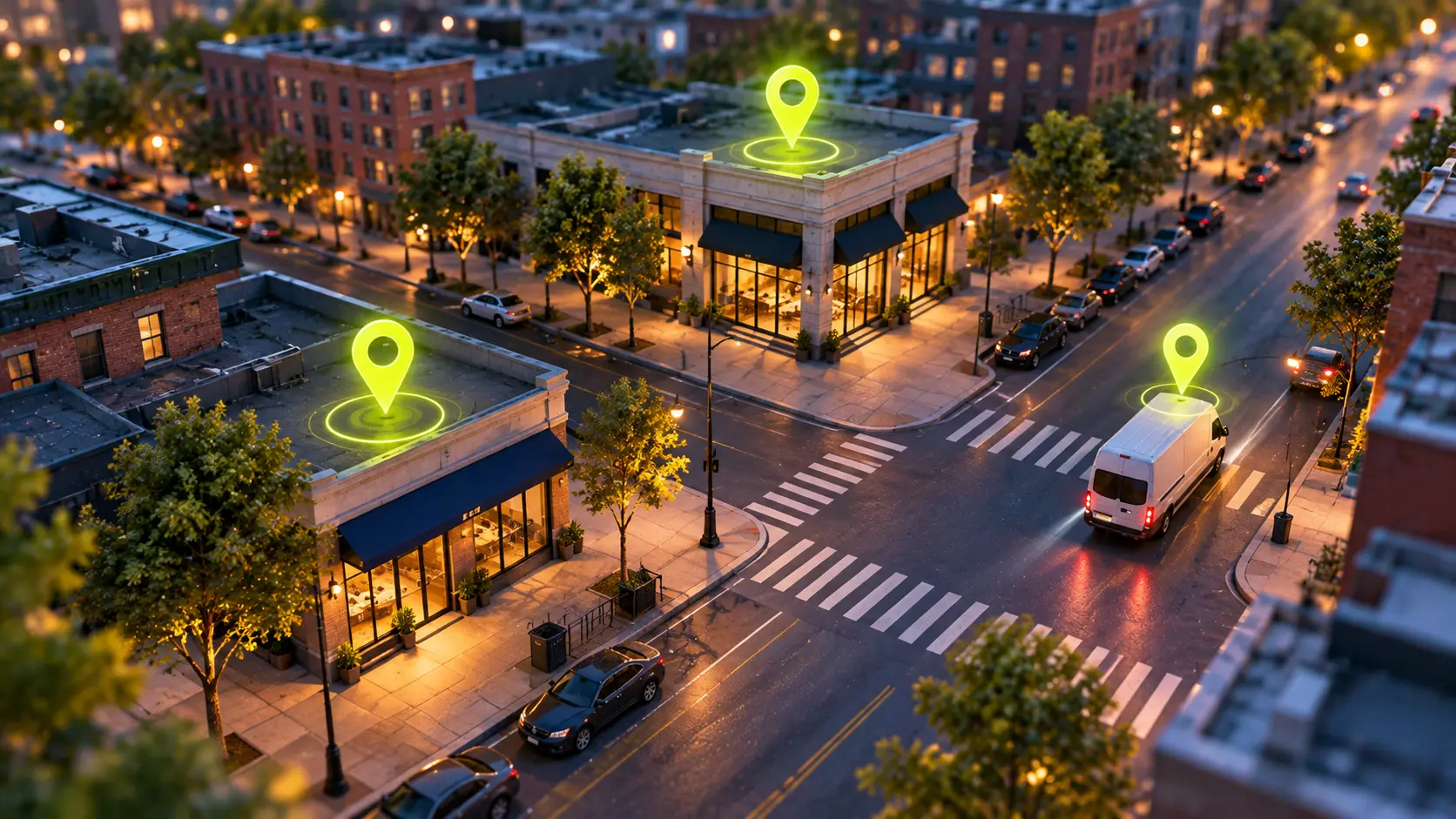
When someone in Astoria types "emergency plumber near me" at 11 p.m., Google shows three businesses in a map, then everything else. Those three get most of the calls. The firm on page two gets almost none, even if its work is better. Local SEO is the job of getting into that map pack for the searches that pay, and staying there.
This guide is written with New York in mind, because dense markets make every mistake more expensive, but the mechanics are the same in Phoenix or Pittsburgh. It covers what Google actually ranks, your Google Business Profile, reviews, NAP consistency, service-area pages and local links. It does not cover pricing or how to hire help. For that, see our post on what SEO costs a small business in 2026.
What "near me" actually ranks
Google is unusually direct about this. Its own documentation says local results are based on three things: relevance, distance and prominence. Relevance is how well your profile matches the search. Distance is how far you are from the searcher, or from the place named in the search. Prominence is how well known you are, which Google says is informed by links to your business and by review count and score. It also states plainly that there is no way to pay for a better local ranking.
Independent research agrees. Whitespark's 2026 Local Search Ranking Factors report, built from a survey of local SEO practitioners, ranks the three most important map pack factors as your primary Google Business Profile category, proximity to the searcher, and keywords in the business name. The same report notes that review signals and behavioral signals (people clicking, calling, asking for directions) grew in importance this year.
Two takeaways. You cannot change proximity, so stop fighting it; a Bronx electrician will not rank in Bay Ridge, and that's fine. Almost everything else is in your control: category, profile completeness, reviews, your website, and your reputation across the web.
Google Business Profile: get the fundamentals right
Your profile is your most important local asset. Most service businesses have one, and most are half finished.
Pick the right primary category. "Plumber," not "Contractor." "Personal injury attorney," not "Law firm." The primary category is the strongest relevance signal you control. Add secondary categories for other real services, but don't stuff in ones you barely offer.
Verify it. Google says verification makes a business more likely to show in search results. Video verification is now common for service-area businesses, so be ready to show your vehicle, tools and signage.
Fill in everything. Hours, including holidays. Phone. Website. Services with short descriptions. Attributes. Google's own guidance is that complete and accurate profiles are more likely to appear in local results. It's the easiest win in local SEO and it still gets skipped.
Address or service area. If customers come to you (a clinic, a law office), show the address. If you go to them (plumbing, home care, cleaning), hide it and set a service area. Listing a home address as a storefront is a common reason profiles get suspended.
Photos, posts and Q&A. Real photos of your team, trucks and finished work, added regularly. Seed the Q&A with the questions your front desk answers every day. None of this is a ranking miracle. All of it helps conversion once you rank.
Reviews: volume, recency and replies
Reviews feed prominence, and they decide whether a person who sees you actually calls. BrightLocal's 2026 Local Consumer Review Survey of 1,002 US adults found that 97 percent of consumers read reviews, 68 percent require a rating of four stars or higher, and 31 percent will only use a business rated 4.5 or above, nearly double the share from the year before.
Three findings from that survey should shape your process.
Quantity. 47 percent won't use a business with fewer than 20 reviews. If you have eight, getting to 25 beats any website change.
Recency. 74 percent only consider reviews from the last three months. A hundred glowing reviews from 2023 are not doing much work. You need a steady trickle, not a one-time push.
Replies. 89 percent expect owners to respond, and half are put off by generic or templated replies. Reply to every review in your own voice, including the bad ones. Never argue.
How to get them: ask at the moment of satisfaction, by text, with a direct link. Train the techs, nurses or paralegals who finish the job to ask. Do not gate, do not offer incentives, and do not buy reviews. Google removes them and can suspend the profile.
NAP consistency: one name, one address, one phone
NAP stands for name, address, phone. Google cross-checks your profile against your website, Yelp, Apple Maps, Bing Places, industry directories, state license lookups, and dozens of data aggregators. When those disagree, Google trusts you less.
The usual culprits are old addresses from a move, a tracking phone number on one listing and the real number on another, "LLC" on some and not others, and suite numbers formatted three ways. Fix it once, then keep a master record and use it everywhere.
For New York businesses there is one more layer: multi-location firms across boroughs. Give each real location its own profile, its own page on your site, and its own consistent NAP. Never create a profile for a location that is only a mailbox.
Service-area pages that don't look like spam
You serve Brooklyn, Queens and Nassau County, but your profile can only be in one place, and proximity rules the map pack. The organic results below the map are where you reach the rest of your territory, and that is what service-area pages are for.
A good service-area page is a real page about a real place. "Water heater repair in Flushing" should talk about the housing stock there (pre-war co-ops and their old risers), jobs you've done nearby, permit quirks, parking, response times from your base, and a few named landmarks. Add photos from that area and a review or two from customers there.
A bad service-area page is the same 400 words with the neighborhood name swapped out, duplicated forty times. Google ranks almost none of them. If you cannot write something specific about a place, you are not ready to target it.
Structure matters too. One page per primary service, one per primary area, and only cross them where search volume justifies it. A plumber in Jersey City does not need "faucet repair in Hoboken." They need "plumber in Hoboken" done well.
Local links: where they really come from
Google names links as a prominence signal, and local links are easier to earn than most people think. You are not chasing national press. You are chasing the websites that already talk about your area.
The reliable sources: your chamber of commerce and business improvement district, trade associations and license directories, manufacturers that list certified installers, the sponsorship page of the Little League or the block association, and the neighborhood news site that covers local businesses. Clinics and law firms can add hospital affiliations and bar associations. Home care agencies can add senior centers and referral networks.
Each is a small link. Together they tell Google you are an established business in a specific place, which is exactly what prominence means.
Your website still has a job
Google also reads your website to decide relevance, and the website is where the call happens for organic visitors. Every page should say what you do and where, with the service and the area in the title and first heading. Put your NAP in the footer in plain text, matching the profile exactly, add LocalBusiness schema, and make the phone number tap-to-call on mobile.
If you rank reasonably well but the phone is still quiet, the issue is usually the site rather than the search engine. Our post on why a website is not getting leads covers the nine fixes we check first.
A 90-day order of operations
If you do nothing else, do this in this order.
- Weeks 1 to 2: Fix the primary category, verify, and complete every field on your profile. Audit NAP across the top 15 directories and correct every mismatch.
- Weeks 3 to 6: Launch a review process. Target 20 new reviews in 60 days and reply to each within a day.
- Weeks 5 to 10: Write or rewrite your core service pages and your two or three most valuable area pages. Specific, local, with photos.
- Weeks 8 to 12: Earn five local links from the organizations you already know. Add photos and a post to the profile every week.
Then measure: calls and direction requests in the profile's performance report, and calls from the site. Local SEO is one of the few channels where the result is your phone ringing.
One thing that helps more than most owners expect: having the people who maintain your website also handle the profile, the pages and the review process. When one team owns both over the long term, nothing falls between two vendors.
Next step
If you serve a few neighborhoods and are not sure why the map pack keeps showing someone else, we are happy to look at your profile, your site and your competitors and tell you what we would do, including when the answer is "fix three things yourself and you're done." Book a free call and you will get a written recommendation within a few days, whether or not you work with us.
- local seo
- google business profile
- service businesses
- nyc